
Imagine having a sous chef who never sleeps. One who flawlessly tracks every last onion, predicts your busiest nights, and even helps personalize your regulars' favorite orders. That’s the reality of how AI can be used in a restaurant. This isn't some far-off, futuristic concept anymore—it's about practical tools you can use today to make your restaurant run smoother and keep guests coming back.
Your Restaurant's New Digital Sous Chef
So, what is AI in this context? Think of it less like a robot taking over and more like a powerful assistant for your team. It's a "digital sous chef" that excels at the tedious, data-heavy tasks that eat up so much time. It crunches the numbers, finds the patterns, and handles the repetitive work across your entire operation, freeing up your staff to focus on what they do best: creating amazing food and delivering genuine hospitality.
And this isn't just a niche trend. Restaurant leaders are already putting real money into this. Industry data shows that 63% of operators are using AI to improve their customer experience, and 55% are using it to get a better handle on inventory management.
The writing is on the wall: 82% of restaurant leaders plan to increase their AI spending. This shift is happening now.
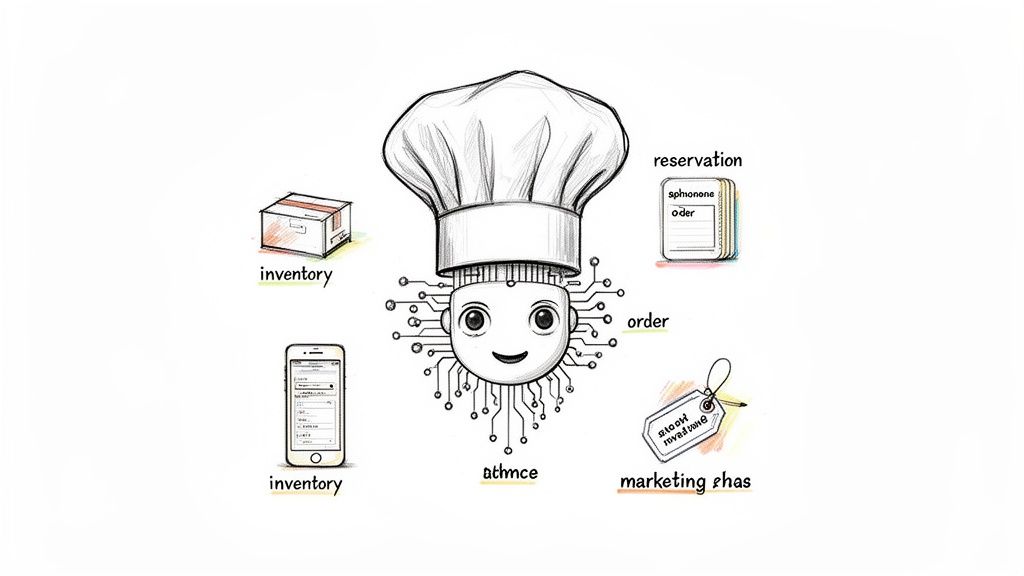
To help you see where these tools fit, let's break down where AI is already making a real impact in restaurants big and small.
Key AI Applications in Restaurants at a Glance
This table gives you a quick snapshot of the key areas where AI can be a game-changer for your operations.
| Operational Area | AI Application Examples | Primary Benefit |
|---|---|---|
| Front-of-House Operations | AI phone agents, smart reservation systems, online ordering with smart upsells, personalized guest messaging. | Enhanced guest experience and higher check averages. |
| Back-of-House Efficiency | Demand forecasting, automated inventory management, kitchen display system (KDS) optimization. | Reduced food waste and improved operational speed. |
| Marketing & Personalization | Targeted promotions based on purchase history, social media content generation, automated review management. | Increased customer loyalty and stronger online presence. |
| Staffing & Scheduling | Predictive scheduling based on foot traffic data, automated shift management, labor cost optimization. | More efficient staffing and lower labor costs. |
By understanding these categories, you can start to pinpoint which tools will solve your most pressing challenges first.
Where AI Delivers the Most Impact
The applications for AI are broad, but they really shine in a few core areas where you can see immediate, measurable results.
-
Front-of-House Operations: This is everything your guests touch and see. Think AI-powered reservation systems that eliminate no-shows, 24/7 phone agents that never miss a call, and smarter online ordering platforms that guide customers to what they'll love.
-
Back-of-House Efficiency: Here, AI works its magic behind the scenes. It can help you forecast demand to stop over-ordering produce, optimize staff schedules so you're never short-handed on a surprise rush, and even automate supply orders before you run out of key ingredients.
-
Marketing and Personalization: AI gives you the power to understand your customers on a much deeper level. It can dig into your sales data to create targeted promotions that actually work and help you manage your online reviews to keep your reputation sparkling.
The best part? Many of these technologies are no longer just for the big chains. To see what's out there, check out our guide on the best AI tools for small business.
Enhancing the Guest Experience with AI
The first place your guests will feel the impact of AI is in their own journey with your restaurant. Think of it as a tireless digital host, working behind the scenes to create a smoother, more responsive experience that starts long before anyone steps through your door.
This isn't about replacing people. It's about freeing up your team to do what they do best: deliver amazing, in-person hospitality.
Take your reservation process. An AI-powered system does more than just log a booking. It intelligently juggles your waitlist, gets smarter about predicting no-shows, and helps optimize table turnover to squeeze the most out of every service. That means fewer empty tables during a dinner rush and more accurate wait time quotes for your walk-ins.
Smart Communication Around the Clock
One of the biggest game-changers here is the AI voice agent—basically, a virtual receptionist that’s on the clock 24/7. It picks up every single call, instantly handling the routine stuff that would otherwise tie up your host.
These agents can:
- Book and change reservations on their own.
- Answer common questions like "What are your hours?" or "Do you have parking?"
- Take complex takeout orders, including all the tricky customizations and special requests.
Imagine an AI calmly handling a detailed allergy question over the phone, gathering all the right info and flagging it for the kitchen. That single interaction prevents a missed call, saves a sale, and lets your host give their full attention to the guests who are right in front of them.
By automating these routine interactions, restaurants can see a huge lift in efficiency. The data shows an average 27% decrease in response time for guest inquiries when AI messaging is in the mix, which goes a long way in making customers feel heard.
Intelligent Ordering and Feedback
This is where things get really interesting. AI can turn the simple act of ordering into a much smarter, more profitable exchange.
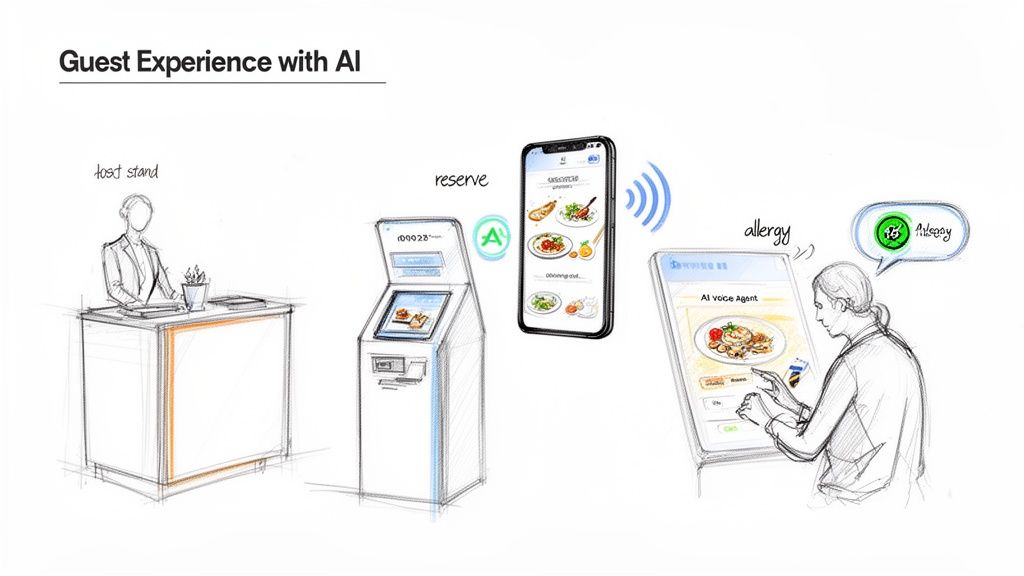
Smart kiosks and online ordering platforms can use what they know about a customer's order—or their past habits—to make intelligent suggestions. Think of it as a digital upsell, recommending a wine pairing or a side dish that perfectly complements their main, bumping up the average check size without being pushy.
And it doesn't stop when the meal is over. Getting honest feedback is gold, but sifting through it is a ton of work. AI can instantly process comments from tools like restaurant QR feedback systems, analyzing the sentiment and pulling out common themes. This gives you a clear, actionable pulse on what’s working and what needs fixing right now.
If you're looking to go deeper on this, we've got a whole guide on using AI for customer service.
Optimizing Your Kitchen and Back-of-House
If the front-of-house is the face of your restaurant, the kitchen is its heart. This is where AI stops being a polite host and turns into a master strategist, bringing a dose of intelligent order to the beautiful chaos of your BOH operations. It gets right to the core of the biggest headaches: waste, inefficiency, and pure guesswork.
The first place you'll feel the impact is inventory. Let's be honest, manual counts are a drag. They're slow, riddled with errors, and always a step behind reality. AI flips that script. It uses predictive analytics to turn your stockroom from a reactive cost center into a smart, proactive system that knows what you need before you do.
Predictive Demand Forecasting
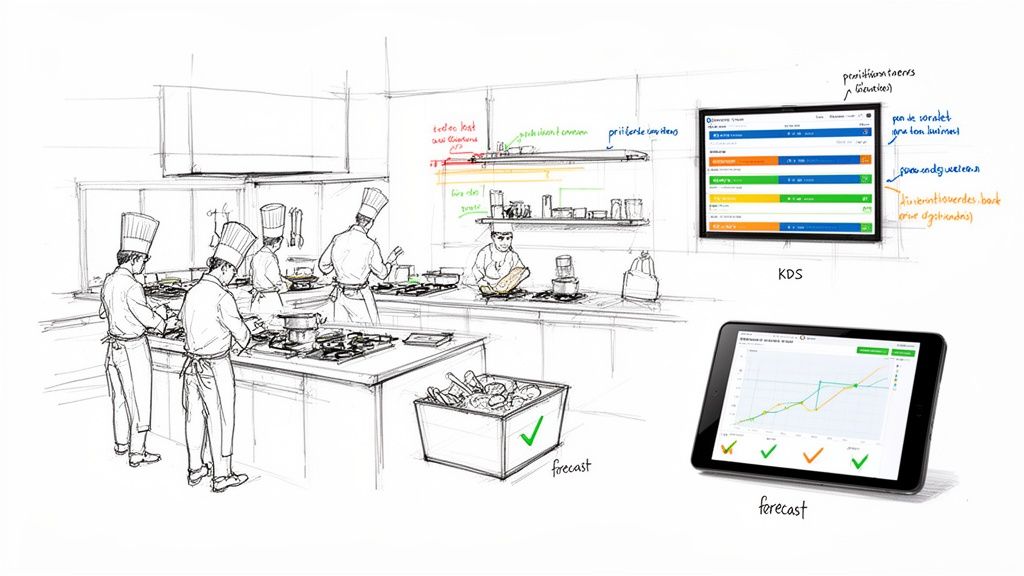
At the core of this kitchen revolution is AI-driven demand forecasting. Think of it as a data-powered crystal ball. Instead of just glancing at last Tuesday's sales, these systems juggle a whole host of variables to paint a shockingly accurate picture of the week ahead.
It's not just guesswork. It's an analysis of:
- Historical Sales Data: Pinpointing the ebbs and flows of what sells and when.
- Local Events: Is there a big concert down the street? A food festival in the park? The AI knows.
- Weather Patterns: It can predict a run on hot soup for a rainy Monday or iced tea during a heatwave.
- Day of the Week: It understands the completely different rhythm of your Tuesday lunch crowd versus the Saturday night dinner rush.
This kind of forecasting feeds directly into your purchasing, helping you order just the right amount of fresh salmon or avocados. The result is a massive drop in food waste—a huge win for your profit margins and your sustainability goals. By plugging these insights into the right systems, you can find the best workflow automation tools to get your entire supply chain running like a well-oiled machine.
These BOH tools aren't some far-off fantasy; they're becoming the norm. AI for inventory and food safety is practically standard practice now. Some vendors report that AI is used in back-office functions in as many as 96% of their client restaurants. You can dig deeper into these trends in this restaurant technology report.
Smarter Kitchen Display Systems
Once the orders start flying in, AI keeps the momentum going with intelligent Kitchen Display Systems (KDS). A modern KDS is so much more than just a screen that flashes tickets.
AI-powered systems act like an orchestra conductor for your order queue. Imagine a ticket comes in for a well-done steak (a long cook time) and a simple Caesar salad. The KDS is smart enough to fire the steak order to the grill station early, timing it perfectly so both dishes are ready to go out at the exact same moment.
This kind of coordination slashes ticket times and ensures every plate leaves the kitchen hot, fresh, and exactly as it should be. It creates the kind of consistency that turns first-time visitors into regulars.
Building Smarter Staff Schedules with AI
Let's be honest, managing labor is one of the toughest, most expensive puzzles in the restaurant business. Juggling shift availability, trying to guess next Friday’s rush, and dealing with last-minute call-outs can feel like a high-stakes guessing game. This is exactly where AI steps in, swapping the chaos for a clear, data-driven process.
Think of your old scheduling method as a static photograph—it’s a snapshot in time based on what you think will happen. AI-powered scheduling is more like a live video feed. It’s constantly pulling in new data, adapting on the fly to make sure you have the right people in the right places, always.
These systems tap into the same demand forecasting data we talked about for inventory. By looking at historical sales, local events, and even the weather, the AI builds a schedule that’s actually optimized. This means no more getting caught short-staffed during a surprise dinner rush or paying a full crew to stand around on a slow Tuesday afternoon.
Automating the Administrative Burden
Beyond just building the schedule, the real magic is how these tools automate the tedious, time-sucking admin tasks that bog managers down.
Here’s a look at what a modern, AI-assisted scheduling dashboard can do.
This isn’t just a fancy spreadsheet. It’s a central hub that gives you a clear view of shifts, labor costs, and your team's availability, turning raw data into moves you can actually make.
A system like this gets rid of the most common scheduling headaches:
- Managing Shift Swaps: Employees can request to trade shifts right from an app. The AI can instantly approve swaps that won’t push anyone into overtime or create a conflict.
- Time-Off Requests: Requests get automatically checked against blackout dates and staffing levels, cutting out all that manual back-and-forth.
- Compliance Assurance: The software keeps up with local labor laws, flagging potential violations around break times or overtime before they become a problem.
This kind of automation adds up to huge efficiency gains. One recent study found that 69% of operators who brought in new tech said their restaurants ran more efficiently. The data backs it up, showing a 10–20% reduction in labor strain just from smarter staffing. You can dig into more of these restaurant industry findings on Kioskindustry.org.
From Cost Savings to Happier Teams
The most obvious win here is the direct hit to your bottom line. By preventing overstaffing and making every labor dollar work harder, these tools are a massive asset. For a much deeper look, check out our guide on how to reduce labor costs in your restaurant.
But the benefits go way beyond the finances. A well-balanced schedule, built with fairness and predictability in mind, creates a happier, less-stressed team. When your crew feels like their time is respected and the workload is managed well, they stick around longer—and the quality of service goes up right along with it.
Personalizing Marketing and Building Loyalty
Beyond the kitchen and the schedule, this is where AI starts to feel like a secret weapon for connecting with your customers. It helps you turn generic marketing blasts into real conversations, figuring out what your guests actually want and building the kind of loyalty that turns a first-timer into a regular for life.
Think of it as your restaurant's digital memory. AI tools can plug right into your Point-of-Sale (POS) and loyalty systems, digging through mountains of data to spot patterns you'd never see on your own. This is how you get beyond one-size-fits-all promotions and start creating offers that feel like they were made just for that one person.
From Data to Diner-Specific Deals
Imagine a customer who always orders your spicy rigatoni but hasn't stopped by in a few months. An AI system can automatically flag this, then send them a personalized email or text with a special offer for their favorite dish. See the difference? It's not just a random coupon; it’s a thoughtful nudge that shows you’re paying attention.
This level of detail is incredibly powerful because it focuses on what matters:
- Purchase History: Identifying favorite dishes, drinks, and how often someone visits.
- Customer Segmentation: Grouping guests by their habits—think "weekend regulars" vs. "lunch-only visitors"—to tailor your campaigns.
- Predictive Offers: Suggesting new menu items a guest is likely to love based on what they've ordered before.
To really make this work, it helps to have one of the best loyalty programs for restaurants in place, which you can then supercharge with these AI-driven insights.
This shift toward tech-powered retention isn't just a niche idea; it's a major industry trend. In fact, research shows that roughly 70% of restaurants are either actively using or piloting AI to improve their loyalty and employee-experience programs. You can dive deeper into this trend over at Restaurant Technology News.
Managing Your Reputation and Pricing
AI also acts as your eyes and ears across the internet. It can constantly scan review sites and social media, analyzing what people are saying to give you a clear, honest picture of your online reputation.
If a handful of reviews all mention slow service on Saturdays, the system will highlight that trend for you. No more guessing—you can see the problem and jump on it immediately.
It also opens the door to smarter, dynamic pricing. By analyzing demand patterns, an AI can suggest small price adjustments—maybe a slight discount on appetizers during a typically slow Tuesday—to help you fill seats and maximize revenue without scaring off your customers. Building these kinds of connections is what it's all about, and you can explore more customer retention strategies for small business in our dedicated guide.
Your AI Implementation Roadmap
Diving into AI doesn’t mean you have to rip everything out and start over. Far from it. The smartest way to get started is by picking off your biggest problems one by one, using small, targeted solutions that deliver a quick payback.
Think of it like adding a new station to your kitchen line. You wouldn’t rebuild the entire kitchen just to fix one bottleneck. You’d identify the chokepoint and add the right piece of gear to solve it. That's the exact same logic you should apply here. The goal is to build momentum with clear, measurable wins.
Start With High-Impact Quick Wins
For most independent and midsize operators, the day-to-day grind comes down to two things: missed revenue and administrative headaches. This makes certain AI tools the perfect place to start because they attack these issues right away without a ton of complexity.
Here are a couple of no-brainers to consider:
- An AI Phone Agent: This is often the fastest way to see a tangible return. When you capture every single call, you stop losing reservations and takeout orders to a busy signal or an overwhelmed host. The impact on your top line is immediate.
- A Basic Forecasting Tool: Hooking up a simple forecasting tool to your POS can give you a much clearer picture of what’s coming. This helps you make smarter calls on ordering and staffing from day one.
The power of these tools isn't just theoretical. Automated call-management platforms, for instance, have been shown to handle over 75% of monthly calls for some brands. That saves a single location more than 21.5 hours of staff time every month. You can find more details in these restaurant industry findings.
The Core Steps to Success
Once you’ve picked your starting point, follow a clear process. A rushed rollout with fuzzy goals is where a lot of operators get tripped up.
A winning AI strategy isn't about having the slickest, most advanced tech. It's about using the right tech to solve a real business problem. Get obsessed with solving one pain point exceptionally well before you even think about the next one.
This diagram breaks down the simple but powerful process AI uses to turn your customer data into personalized marketing that keeps people coming back.
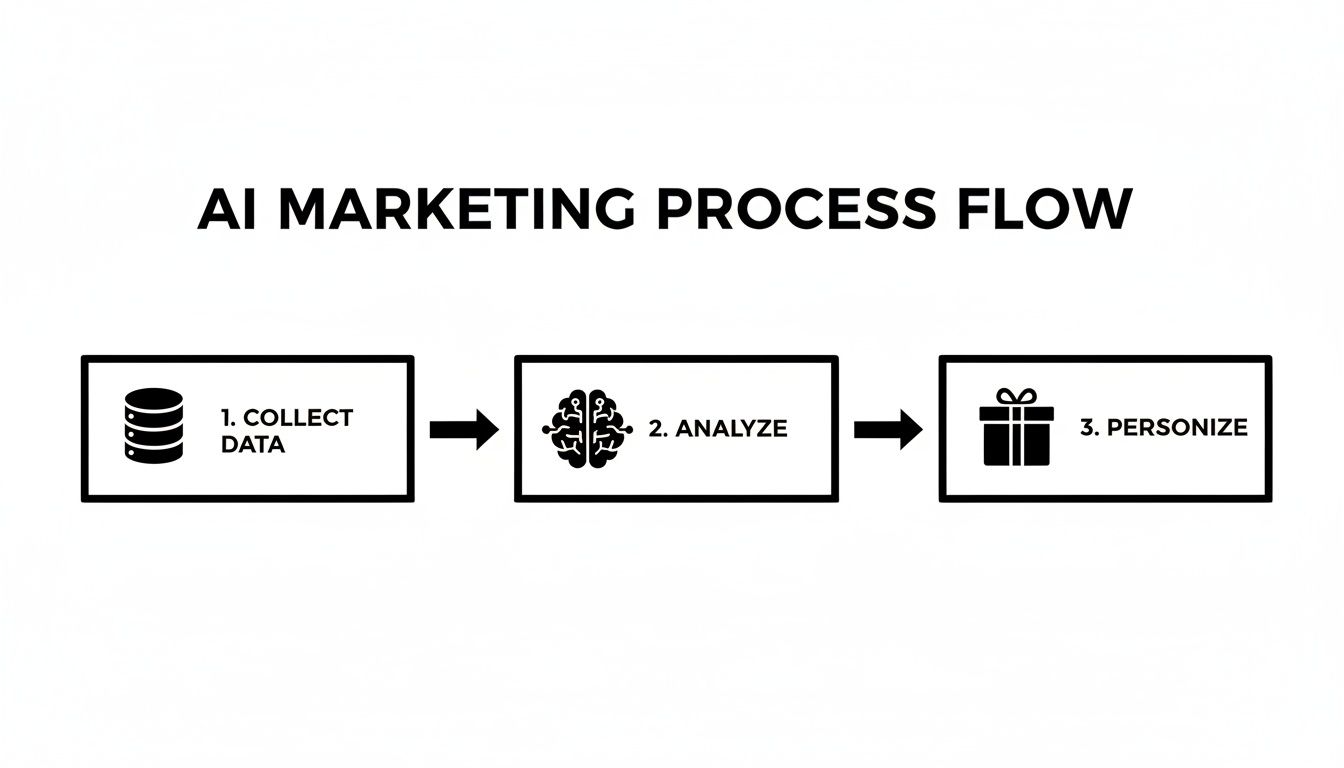
This flow—from data collection to analysis to personalization—is the engine that powers smarter, more effective campaigns that build genuine loyalty with your guests.
Let's Cut Through the Noise: Your AI Questions Answered
Diving into any new tech brings up a ton of questions. I get it. For most restaurant owners I talk to, figuring out how AI fits into their world comes with very real concerns about cost, complexity, and most importantly, the soul of hospitality.
Let’s tackle the big ones head-on.
Isn't This AI Stuff Just for Big Chains with Deep Pockets?
Not anymore. That used to be the case, but the game has completely changed. While a custom-built, enterprise-level system can still be a massive investment, many of the most powerful AI tools are now available as simple, affordable monthly subscriptions.
Think of it like your POS or reservation system—it's Software-as-a-Service (SaaS), which gets rid of the scary upfront cost.
An AI phone agent or a smart scheduling platform often has a surprisingly low entry point. They’re built to pay for themselves almost immediately by saving you countless labor hours and grabbing revenue you’d otherwise miss. This makes them a no-brainer for small and midsize operators.
Will AI Make My Restaurant Feel Like a Robot Runs It?
This is the most important question, and it's one we should all be asking. The goal of good AI is never to replace hospitality; it's to supercharge it. Think of it as a tool that finally silences all the operational noise so your team can focus on what they do best—creating incredible experiences for your guests.
When you automate the repetitive stuff—taking reservations over the phone, managing waitlists, counting inventory—you give your team the one thing they never have enough of: time. That’s more time to actually talk to guests, to notice the little things, and to add those personal touches that make people come back.
Okay, I'm Interested. How Do I Pick the Right AI Partner?
This is where you need to be smart. It’s easy to get blinded by flashy demos and long feature lists. The key is to start by nailing down the one problem you desperately need to solve.
Get specific. Is it, "We miss way too many calls during the dinner rush"? Or maybe, "Our food waste is consistently killing our margins."
Once you know your mission, the process gets a lot simpler:
- Find the Specialists: Don't go for the jack-of-all-trades. Look for vendors who live and breathe your specific problem and have proof (case studies, testimonials) from restaurants just like yours.
- Demand a Real Demo: Never buy without seeing it in action. You need to understand how it works and, more importantly, how your team will actually use it day-to-day.
- Check the Connections: Make sure it plays nice with your existing tech, especially your Point-of-Sale (POS). A tool that doesn’t integrate is just another headache.
- Vet the Support: A great product with terrible support is a terrible product. Look for a partner known for being there when you need them and for being upfront about pricing.
Stick to this, and you’ll end up with a tool that starts adding real value from day one.
Ready to stop missing calls and start capturing more business? Marlie Ai provides a 24/7 AI phone assistant that answers every call, books appointments, and frees up your staff to focus on your guests. See how it works.
