

Conversational analytics software turns every customer chat or call into a treasure trove of insights. Think of it as a coach reviewing game film: you see your best plays, uncover missed opportunities and understand the crowd’s reaction. Under the hood, AI-driven transcription, sentiment scoring and topic detection work together to surface patterns you’d otherwise overlook.
Setting The Stage For Conversational Analytics Software
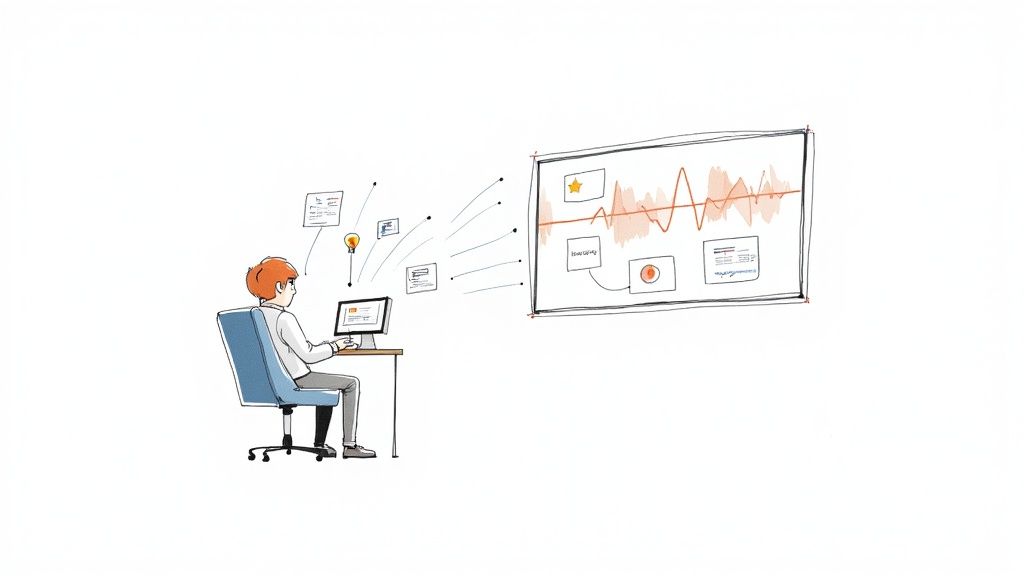
At its core, conversational analytics tackles one big headache: turning messy, unstructured talk into clear, actionable data. It decodes voice and chat threads to show you what customers really feel—and what they’re really asking.
• Capture raw interactions with speech-to-text transcription
• Gauge mood shifts through sentiment scoring
• Spot recurring themes and questions at scale
Imagine a retail support team. They notice sentiment dipping on calls about returns, flagging a possible spike in churn. Armed with that insight, they launch targeted outreach, coach agents on handling objections—and shift from reactive firefighting to proactive strategy.
Why Teams Need Conversational Analytics Software
Customer conversations rarely arrive neatly packaged. Manual reviews barely scratch the surface—often under 5% of all calls ever get listened to. What’s left hidden could be the next big improvement or a brewing crisis.
Automated platforms transcribe calls in dozens of languages. They layer on sentiment analysis to catch tone shifts. Then they flag issues demanding immediate attention and celebrate top-scoring interactions.
“It’s like watching game tape on every conversation—you’ll uncover both your star plays and areas dragging you down.”
Use this guide as your playbook. We’ll walk through core concepts, break down essential features and share real-world case studies. By the end, you’ll have a step-by-step checklist to choose the right vendor and roll out your own conversational analytics program.
Key Challenges Addressed By Conversational Analytics
Data often lives in silos—call logs here, chat transcripts there, notes scattered across platforms. Teams waste time hunting for context. A unified analytics dashboard brings everything into view.
• Increase first-call resolution rates
• Ensure consistent service quality across channels
• Reveal cross-sell and upsell signals automatically
Solving these pain points frees your team from manual drudgery and uncovers high-impact actions. With a single source of truth, you can focus on strategic growth instead of piecing together fragmented data.
Next up, we’ll explore how transcription, sentiment analysis and topic modeling work in concert. Then we’ll dive into case studies from retail to telecom. Finally, you’ll find a comprehensive vendor evaluation checklist to guide your implementation. Let’s unpack each component’s role, function and impact below.
Understanding The Key Concepts
Picture a detective leaning into every customer interaction—listening to tone, spotting hints, piecing together intent. That’s conversational analytics software in a nutshell: it uncovers the subtle clues hidden in calls and chats.
Think of it as a journey from raw conversation to sharp, actionable insights. You start with recorded speech or text, and end up with real-time alerts and clear reports.
Next, let’s unpack the building blocks that make this transformation possible.
Key Components Overview
At its heart, conversational analytics relies on five engines working in harmony:
- Speech-to-Text Engine acts like a tireless notetaker, capturing every word with precision.
- Sentiment Analysis works as a live mood ring, flagging frustration or delight on the spot.
- Topic Categorization organizes chatter into neat chapters, so you can zero in on subjects in seconds.
- Keyword Spotting shines a searchlight on critical phrases—think regulatory terms or product names.
- AI-Driven Coaching steps in as a virtual mentor, offering agents timely tips during or after calls.
Core Workflow Explained
First, speech-to-text transcription turns spoken words into searchable text almost instantly. Next, sentiment analysis tracks emotional shifts throughout each exchange. Then, topic categorization groups related themes, while keyword spotting highlights must-know phrases. Finally, AI-driven coaching fires off suggestions to keep agents on point.
- Speech-to-Text Transcription transforms audio into text you can query.
- Sentiment Analysis functions like a live meter of customer mood.
- Topic Categorization clusters conversations to spotlight recurring issues.
- Keyword Spotting flags compliance terms or upsell opportunities.
- AI-Driven Coaching delivers in-moment guidance to agents.
“Conversational analytics weaves raw dialogue into strategic insights.”
Visualizing Data Flow
Imagine a factory line where raw materials move through stations, each adding its own value. Here, your “raw material” is unstructured dialogue. As it travels:
- Input channels (calls, chats, transcripts) feed the speech-to-text station.
- Downstream, NLP engines tag sentiment and topics.
- Finally, analytics dashboards serve up the metrics and alerts you need.
This pipeline ensures you don’t just record conversations—you turn them into clear, prioritized next steps.
Market Growth Context
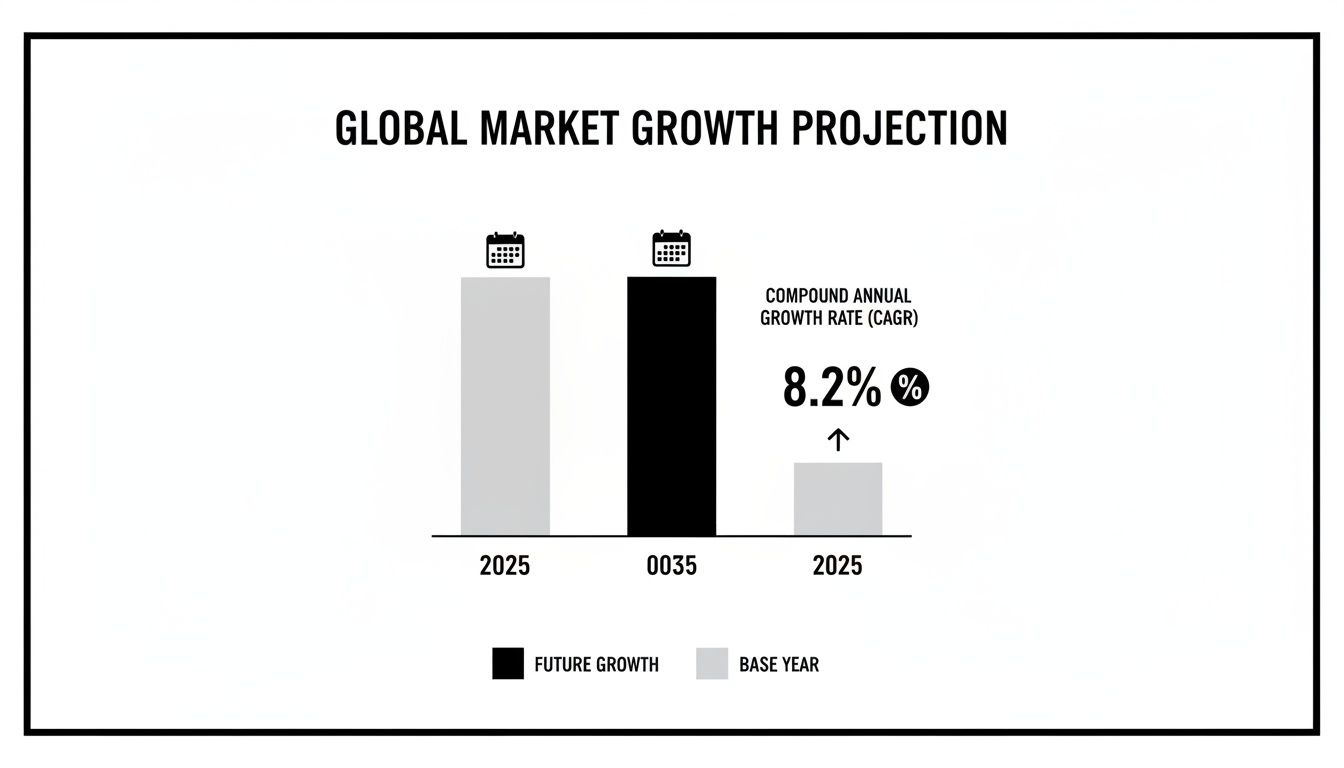
Interest in conversation intelligence has surged. Most analysts peg the market at USD 25.3 billion in 2025, with growth to USD 55.7 billion by 2035 at an 8.2% CAGR. You can dive into the full research from Future Market Insights.
Below is a quick comparison of different forecasts:
Market Growth Estimates For Conversation Intelligence
| Research Firm | 2025 Estimate | 2035 Projection | Projected CAGR |
|---|---|---|---|
| Future Market Insights | USD 25.3 billion | USD 55.7 billion | 8.2% |
| Grand View Research | USD 27.1 billion | USD 60.0 billion | 8.5% |
| MarketsandMarkets | USD 24.0 billion | USD 52.0 billion | 7.8% |
These figures paint a consensus: conversation intelligence is on track for steady expansion over the next decade.
Next Steps
With these core concepts in place, you’re ready to evaluate specific platforms. For hands-on guidance, check out our call transcription workflow at Marlie.ai Solutions for Call Recording Transcription.
Integration And Action
Begin with a small pilot—route a subset of calls through your chosen analytics tool. Focus on:
- Transcription accuracy
- Sentiment detection reliability
- Relevance of generated alerts
Document results, tweak your sentiment thresholds, and refine coaching prompts before scaling up. That way, when you roll out broadly, your insights hit the mark every time.
Key Features Of Top Solutions
Imagine having a tireless scribe by your side, capturing every spoken word and turning it into searchable text in real time. It’s like carrying a notebook that never misses a detail. With this, no nugget of customer feedback slips through the cracks.
“Transcription gives teams a searchable record to improve training every day.”
Key transcription capabilities include:
- Live Caption Generation to support agents with hearing challenges.
- Language and Dialect Customization for truly global teams.
- Automated Speaker Diarization that tags who said what, when.
Real Time Transcription Accuracy
On a clean audio line, leading tools hit around 95% accuracy, dipping only when background noise kicks in. That level of precision slashes review time and makes search results far more dependable.
Tool Dashboard Snapshot
Take a quick peek at the dashboard and you’ll see error rates, throughput, and other metrics laid out in clear charts. This view helps you spot dropped words and tweak microphone levels on the fly.
Advanced Speech Analytics
Think of speech analytics as a treasure map, revealing keywords, trending topics, and compliance flags hidden in every conversation. It sifts through dialogues and:
- Instantly spots product names or competitor mentions.
- Raises alerts around phrases like GDPR or HIPAA in real time.
- Groups calls by theme for faster reporting.
This way, you never overlook a compliance risk or an emerging trend.
Market Growth Insight
The chart below paints a clear picture of conversational analytics on the rise. From USD 25.3 billion in 2025 to USD 55.7 billion by 2035, we’re looking at an 8.2% CAGR—proof of steady momentum.
AI Coaching And Automation
Picture a digital coach listening in and suggesting responses tailored to each conversation. Behind the scenes, automation workflows handle routine tasks so your team can focus on the customer:
- Auto-tagging high-risk calls for quick compliance checks.
- Dynamic routing that transfers callers to specialists when certain keywords pop up.
- Generating post-call summaries with action items and sentiment scores.
Seamless integrations with CRM, chat systems, and BI dashboards pull insights into one view. Learn more about call intelligence and metadata in our detailed guide.
Integration With CRM
Connecting your conversational platform to a CRM works like magic: contact records fill themselves with conversation details. This tight integration ensures no insight slips through your sales funnel. You can:
- Automatically log calls with sentiment and topic tags.
- Trigger follow-up tasks when negative sentiment spikes.
- Sync keywords to CRM fields for targeted outreach.
Sentiment Engines In Action
Imagine sentiment analysis as a digital mood ring, instantly gauging how customers feel. Teams can respond immediately to defuse negative experiences.
“We saw customer satisfaction jump by 15% after tuning responses based on sentiment data.”
Case Study Retail Support
In one retail center, auto-tagging return inquiries slashed average handle time by 20%. Agents reviewed past sentiment and tailored offers to upsell with surprising ease.
Summary Of Features
Top-tier platforms bring together transcription, speech analytics, sentiment engines, AI coaching, and automation in a single, intuitive interface. With searchable transcripts, real-time alerts, and smart tagging, teams can spot critical issues and act faster than ever.
Tip: Monitor keyword trends weekly to spot emerging pain points and set up alerts that escalate urgent calls to supervisors. Start with a pilot group to fine-tune accuracy and workflows.
Core Benefits For Business Outcomes
Imagine a coach poring over game footage before a big matchup. Conversational analytics software does the same for your calls—transforming every interaction into actionable insights.
By parsing transcripts and tracking sentiment, teams quickly learn what works and what doesn’t. Agents trained this way can boost first-call resolution by up to 25%, cutting unnecessary callbacks.
Shrinking average handle time also adds up. Many operations report a 20% reduction in talk time within the first month, driving real cost savings.
Real Impact Metrics
Some results speak for themselves:
- 15% uplift in customer satisfaction through targeted coaching
- 30% drop in compliance fines by flagging risky conversations
- Revenue growth from cross-sell signals spotted on 10% of calls
Every dollar you invest can return multiple dollars in savings and new revenue.
ROI Calculation Example
Let’s run the numbers for a mid-sized call center handling 50,000 minutes monthly:
- Cutting 20% of handle time frees up 10,000 minutes.
- At $0.50 per minute, that’s $5,000 saved each month.
- A 10% lift in cross-sell on 2,000 upsell-worthy calls adds $8,000 in revenue.
Net gain: $13,000 per month.
“Conversational analytics paid for itself in under three months by streamlining operations and uncovering new sales opportunities.”
Key wins include:
- Efficiency Gains: Automated call tagging and reporting free up agent hours
- Risk Reduction: Early alerts prevent compliance breaches
- Revenue Growth: Real-time coaching identifies promotion triggers
How Teams Accelerate Outcomes
Start small with a single campaign—returns or billing queries often deliver the fastest wins.
- Improve first-call resolution
- Reduce average handle time
- Increase cross-sell lead conversions
Once you see success, scale across channels and integrate dashboards into your CRM so insights surface where agents work.
A retail support team that flagged frustrated callers early cut escalations by 40% and boosted add-on sales by 12%.
Check out our guide on AI call center software to see how platforms compare and learn best practices.
Summary Of Business Gains
| Metric | Before | After |
|---|---|---|
| First-call resolution | 60% | 85% |
| Average handle time | 7 min | 5.5 min |
| Compliance incidents | 15 per month | 10 per month |
| Cross-sell conversion | 5% | 15% |
Those numbers paint a clear picture of ROI and business impact.
- Align analytics goals with business objectives to focus on high-impact insights
- Review dashboard alerts regularly to catch issues early
- Train agents with data-driven coaching to reinforce effective behaviors
Start small, measure your wins, and expand your conversational analytics deployment for maximum impact.
Real World Use Cases
Every day, teams in healthcare, finance, retail and beyond turn to conversational analytics software for real insight hidden in support calls and chat logs. Below, you’ll find four compact case studies. Each one shows the initial hurdle, the analytics-driven fix and the concrete gains that followed.
Healthcare Compliance Monitoring
A sprawling hospital network was drowning in manual transcript reviews—compliance staff spent 60% of their week just auditing call records.
By switching on real-time AI transcription and keyword alerts, they began catching sensitive health discussions the moment they happened.
- Problem: Manual audits missed HIPAA triggers in recorded calls
- AI Action: Automated transcription and targeted keyword detection
- Outcome: 30% Faster Coaching Cycles and 40% Reduction in potential compliance breaches
- Time Saved: Auditors reclaimed 12 Hours per week for deeper investigations
“Automated review caught critical privacy issues we never knew existed.”
Compliance teams quickly moved from reactive checks to proactive risk management, freeing up valuable expert hours.
Sales Lead Qualification
A mid-sized fintech shop found their reps wading through endless demo recordings—only 10% ever surfaced potential leads.
With conversational analytics, phrases like “budget approved” or “next quarter” were automatically tagged and fed back into the CRM, triggering custom coaching notifications.
- Data Capture: Convert audio to searchable text
- Signal Extraction: Detect keywords indicating budget and timeline
- Results: 25% Increase in qualified leads and 15% Shorter Sales Cycles
“We saw demo-to-deal time drop by 20% after AI insights.”
That streamlined pipeline lifted quarterly sales by 18%, while reps saved five hours each week on manual updates.
Retail Sentiment Tracking
A national retail chain faced creeping churn but had no bird’s eye view of customer mood. Agents logged endless feedback, yet emergent patterns stayed hidden.
By aggregating sentiment across thousands of interactions, the analytics dashboard flagged weekly pain points at a glance.
- Churn Impact: 25% Higher Customer Loyalty Scores after targeted outreach
- Product Feedback: 10% Improvement in new release ratings
Managers then updated support scripts and launched follow-up campaigns based on real sentiment data.
Learn more about conversational customer service in our article: Conversational Customer Service Insights.
Telecom Support Efficiency
One telecom giant processed millions of support-call minutes every month but had no quick way to surface outage trends.
After applying topic categorization, any spike in “network down” mentions triggered alerts for field engineers.
- Challenge: Manual tagging delayed incident response
- AI Solution: Real-time classification of network issue mentions
- Impact: 50% Reduction in resolution time and 20% Fewer Escalations
Engineers now know about regional outages within minutes, slashing downtime and boosting satisfaction by 22%.
These snapshots illustrate how conversational analytics transforms raw dialogue into sharper compliance, stronger sales pipelines and happier customers. Starting with a small pilot often pays off in measurable gains within three months—so pick a pain point, give it a whirl and watch for quick wins.
Evaluation Checklist for Solution Selection
Choosing the right conversational analytics tool can feel like solving a complex puzzle. With this list of seven essential criteria, you’ll zero in on what matters most when comparing vendors.
First, run each demo through a simple scorecard. Jot down ratings for transcription accuracy, language coverage, and customization flexibility.
Whenever possible, test with real-world audio—whether it’s heavy accents or your industry’s own jargon. That way, nobody’s caught off guard when you go live.
Scoring Vendor Demos
Assess transcription quality at the 90% and 95% thresholds. Time how fast the service processes audio and whether it handles regional accents smoothly.
Dive into customization. Can you upload industry-specific terms or tweak trigger rules? Also, see if alerts pop up instantly or only in periodic batches.
- Transcription Accuracy: Check word error rates and speaker diarization quality.
- Language And Dialect Support: Verify coverage for your key markets.
- Customization: Test custom keywords, rules, and dashboard layouts.
- Real-Time Alerting: Ensure notifications trigger during live calls.
Expert Insight: A robust integration framework can be the difference between a smooth roll-out and a stalled deployment.
Questions To Ask Your Team
Before you sign off, loop in your compliance and IT leads. They’ll want to audit encryption methods, role-based permissions, and data retention policies.
- What encryption standards are in place?
- Does the platform offer role-based access controls?
- How is data stored and archived?
- Can the solution meet SOC-2 or GDPR requirements?
Comparing Candidate Scores
Once your team has rated each vendor, lay out the numbers side by side. This comparison highlights where one solution shines and another lags.
| Criteria | Vendor A | Vendor B |
|---|---|---|
| Transcription Accuracy | 94% | 91% |
| Dialect Coverage | 12 Languages | 8 Languages |
| Custom Rules | Yes | No |
| Real-Time Alerts | Immediate | 5-Minute Delay |
Pilot Testing And Benchmarking
Kick off a two-week pilot with your own sample calls. Track transcription precision, system latency, and alert reliability day by day.
Need a blueprint? We’ve outlined each step in our guide on automating customer service: How to Automate Customer Service.
Be meticulous. Log everything so procurement teams and execs see clear charts when they ask for proof.
Frequently Asked Questions
What Is The Difference Between Speech Analytics And Conversational Analytics Software?
Speech analytics turns spoken words into text and highlights key phrases. Conversational analytics takes it a step further by scoring sentiment, mapping out topics and even offering AI-driven coaching tips. In short, it moves you from raw transcripts to actionable insights you can act on right away.
How Do Platforms Ensure Data Privacy And Compliance?
Most providers wrap your calls and chats in end-to-end encryption and lock down access with strict, role-based permissions. They usually run on SOC-2–approved clouds and generate an audit trail for every transcript. If you need extra control, plenty of options support secure on-premises hosting—keeping you aligned with GDPR and HIPAA standards.
- End-to-End Encryption for voice and text data
- Role-Based Access Control to limit who can view sensitive information
“Conversational analytics software guides smarter decisions.”
What Implementation Timeline Should I Expect?
A typical rollout takes 8–12 weeks, covering pilot setup, data integration and custom rule configuration. Then you’ll spend about 2–3 weeks on hands-on training and performance validation before going live.
Can Conversational Analytics Work For Text Channels?
Yes—chat transcripts, social media exchanges and email threads all pass through the same NLP models used for calls. That unified approach delivers consistent insights no matter how your customers reach out.
More Questions
If you have other questions or want to see it in action, let us know!
Experience Marlie Ai and start answering calls with AI in seconds by visiting Marlie AI to boost your sales.
