
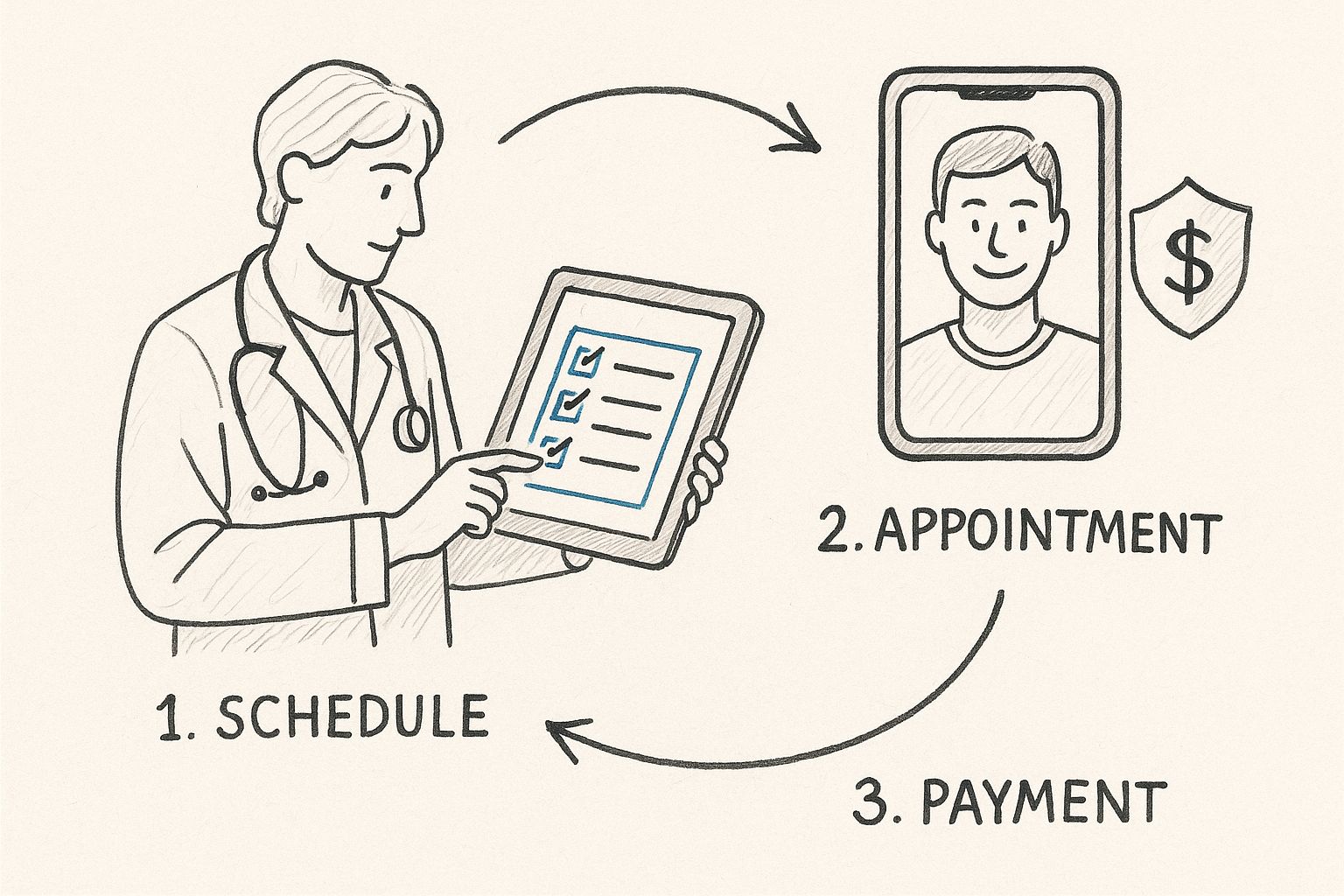
Picture a front desk that never puts a patient on hold. One that never makes a scheduling error and runs 24/7 without a hint of burnout. This isn't some far-off future; it's what a virtual medical receptionist can do for your practice right now. It's the key to finally smoothing out operations and giving your patients the experience they deserve.
Reimagining Your Practice's Front Desk
The front desk is the heart of a medical practice, but let's be honest—it's often a hub of chaos. Phones ringing off the hook, a mountain of administrative tasks, and long patient wait times are all too common. It's a recipe for staff burnout and patient frustration. A virtual medical receptionist tackles these exact problems head-on, acting as a powerful new member of your team.
This technology automates the routine—but vital—tasks that eat up your staff's day. Instead of juggling a constant stream of calls, your team can finally focus on the patients standing right in front of them, handle complex billing questions, and take care of other high-value work. This is part of a larger movement, and you can see why healthcare facilities are switching to digital check-in systems to understand the compelling reasons behind this shift.
The Impact on Operations and Growth
Bringing in a virtual receptionist doesn't just modernize your practice; it opens up a seamless communication line for every single patient. With automated support, no call goes unanswered, turning every inquiry into a potential appointment. By simply being more accessible, you not only serve your current patients better but also start attracting new ones who are looking for that level of convenience.
This upgrade is backed by some serious market momentum. The healthcare virtual assistants market, which was valued at $1.41 billion in 2025, is expected to skyrocket to $19.2 billion by 2035. This incredible growth is fueled by the technology's proven ability to automate administrative work and significantly cut down on operational costs for practices just like yours.
By handling the high volume of routine calls, a virtual medical receptionist allows your skilled human staff to dedicate their time and empathy where it matters most—directly with patients.
This isn't about replacing your team; it's about empowering them. It transforms the front desk from a bottleneck into an efficient, patient-focused powerhouse. To get a better sense of how front-desk duties are changing, check out our guide on what a receptionist does in a modern clinic.
How a Virtual Receptionist Actually Works
Let's be clear: a virtual medical receptionist isn't just a glorified answering machine. Think of it less like a recording and more like a highly trained digital assistant, one specifically designed to navigate the complexities of healthcare communication. At its heart, this technology acts as an intelligent translator between your patients' needs and your practice's operations.
The magic behind this is a technology called Natural Language Processing (NLP). When a patient calls, NLP is what allows the system to understand the intent behind their words. It doesn't matter if they say, "I'd like to book an appointment with Dr. Smith," or something more vague like, "I'm feeling sick and need to see someone." The system gets it. This ability to grasp natural, human language has been a massive leap forward, making interactions feel smooth and intuitive for patients.
The Core Operational Flow
The whole process is built to feel seamless from the moment a patient gets in touch. It's not just about picking up the phone; it's about resolving their reason for calling, quickly and accurately. The system follows a logical, step-by-step workflow for every single interaction.
Here’s a quick breakdown of how it handles the essentials:
- Real-Time Schedule Integration: The virtual receptionist plugs directly into your clinic's scheduling software. When a patient asks to book a visit, it instantly scans the calendar for open slots that fit the doctor, appointment type, and time they’ve requested.
- Intelligent Call Routing: Sometimes, a patient’s issue is just too complex for automation—think of a tricky billing question or a medical emergency. In those cases, the system is smart enough to identify the urgency and transfer the call to the right person on your team without missing a beat.
- Automated Patient Communication: The work doesn't stop with incoming calls. The system also handles crucial outbound messages, like sending automated appointment reminders via text or email. This one feature alone is proven to slash no-show rates.
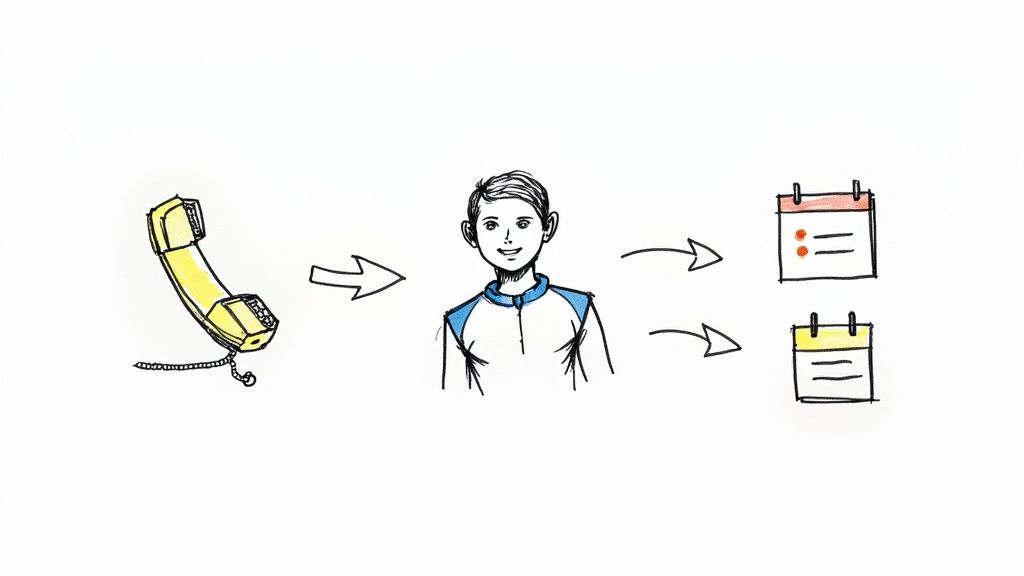
This image below does a great job of showing how a virtual receptionist connects patient needs with practice efficiency.
As you can see, it's a smooth journey from the initial patient request all the way to a confirmed appointment, all managed behind the scenes by the AI assistant.
Putting It All Together for Your Practice
This integrated approach ensures every interaction lands in the right place. Simple requests get handled instantly, which frees up your staff, while more complex issues are escalated to a human.
The true value of a virtual medical receptionist lies in its ability to automate the routine so your human staff can focus on the exceptional. It filters the noise, allowing your team to deliver high-touch care where it matters most.
By taking care of these foundational tasks with precision, the system helps create a front desk that feels more organized and responsive. To get a better sense of how this works for phone calls specifically, you can learn more about the mechanics of an AI phone answering system. This technology isn’t just answering calls; it’s actively managing and strengthening your patient relationships, 24/7.
The True Benefits for Your Staff and Patients
Understanding the mechanics of a virtual medical receptionist is one thing, but seeing its real-world impact is something else entirely. Bringing this kind of AI into your practice creates a clear win-win, delivering powerful advantages for both your internal team and the patients who count on you.
It’s about creating a smarter, less stressful environment for everyone involved.
This shift isn't just about adding a new tool; it’s a strategic move to overhaul your practice's core operations and elevate the patient journey from the very first phone call.
A Force Multiplier for Your Administrative Staff
Your front-desk team is the heart of your practice, but they're often stretched dangerously thin. A virtual medical receptionist acts as a powerful ally, shouldering the burden of repetitive, high-volume tasks. This instantly frees your people from being chained to the phone.
Instead of drowning in constant interruptions, your team can finally dedicate their full attention to higher-value work. Think of it as filtering out all the noise so they can focus on what truly matters.
Here’s where they’ll feel the difference:
- Slash Burnout Rates: Administrative burnout is a real threat. With nearly 53% of practice managers calling it a major stressor, automating the relentless flood of calls provides immediate relief.
- Sharpen Their Focus: Your staff can finally concentrate on the complex human side of their jobs—like handling sensitive in-person check-ins, untangling tricky billing questions, and offering a comforting presence to anxious patients.
- Boost Office Efficiency: With fewer interruptions derailing their workflow, administrative tasks get done faster and with fewer mistakes. The entire front office just runs smoother.
Creating a Modern Patient Experience
For your patients, the benefits are immediate and obvious. We live in a world where convenience is everything, so long hold times and calls that go unanswered after hours are major friction points. The reality is that a shocking 74% of patients will hang up after being put on hold, which translates directly to lost appointments and revenue.
A virtual medical receptionist tears down these barriers, offering the modern, accessible experience people now expect.
The quality of a patient's experience doesn't start in the exam room—it begins with their very first phone call. Providing instant, 24/7 access shows patients you respect their time.
This round-the-clock availability is also a game-changer for keeping your schedule full. Automating appointment reminders is one of the simplest yet most effective ways to reduce no-show appointments and stop revenue leakage. By offering constant support, you ensure no patient call is ever missed, turning every ring into an opportunity.
Now, let's break down exactly how this new approach stacks up against the old way of doing things. The difference is pretty stark when you see it side-by-side.
Traditional Receptionist vs Virtual Medical Receptionist
| Feature | Traditional Receptionist | Virtual Medical Receptionist |
|---|---|---|
| Availability | Limited to office hours (8-10 hours/day, 5 days/week) | 24/7/365, including nights, weekends, and holidays |
| Cost | Full-time salary, benefits, payroll taxes, and overhead | A predictable, lower-cost subscription fee |
| Call Capacity | Handles 1 call at a time; others go to voicemail or hold | Can handle hundreds of simultaneous calls with zero wait time |
| Patient Wait Time | Often involves long hold times, leading to patient frustration | Instant responses and resolutions, eliminating holds entirely |
| Core Tasks | Manually handles calls, scheduling, reminders, and basic inquiries | Automates all routine tasks, freeing up human staff for complex issues |
| Human Error | Prone to errors from multitasking and high-volume stress | Highly consistent and accurate, minimizing booking or information errors |
| Scalability | Hiring more staff is slow and expensive | Scales instantly to meet fluctuating call volume without additional costs |
| Patient Focus | Constantly interrupted by the phone, reducing focus on in-person patients | Allows staff to give 100% of their attention to patients who are physically in the office |
As you can see, it's not about replacing your team. It’s about augmenting them with a tool that handles the grunt work, allowing your skilled staff to operate at their highest and best use—caring for patients.
See How Practices Use Virtual Receptionists
It’s one thing to talk about features, but it's another to see how a virtual medical receptionist actually works in the real world. This isn't some abstract technology; it's a practical tool that slots right into the daily rhythm of a busy clinic, solving headaches for patients and staff alike.
Imagine a parent up late with a sick child. Instead of waiting until morning, they call your practice. The virtual receptionist picks up instantly, understands they need an urgent appointment, and books the first open slot. A moment later, a confirmation text hits the parent's phone. They feel cared for and relieved long before they ever walk through your door.
This kind of immediate, 24/7 access isn't a luxury anymore; it's what patients expect. The data backs this up, with over 70% of patients reporting satisfaction with AI assistants for healthcare tasks. The results speak for themselves—some hospitals have seen a 47% jump in digitally booked appointments after bringing in round-the-clock AI scheduling. If you're curious about the broader trend, you can learn more about how virtual assistants are revolutionizing healthcare.
Managing Different Patient Needs
The beauty of this technology is its flexibility. It meets patients where they are.
Take an elderly patient who isn't comfortable navigating an online portal. They get a simple text reminder for their follow-up visit. The message asks them to reply "YES" to confirm or "NO" to reschedule. With a single word, their appointment is set and the system is updated. No phone call, no hassle.
This simplicity means patients of all ages and tech comfort levels can interact with your practice without friction, building convenience that fosters loyalty.
Thriving During High-Volume Periods
Now, picture your front desk during the height of flu season. Phones are ringing off the hook, and your staff is buried. A virtual medical receptionist handles this surge without skipping a beat, answering every single call instantly.
It becomes an intelligent triage system, taking care of the routine stuff on its own:
- Scheduling sick visits by finding same-day openings in the calendar.
- Answering FAQs about flu shot availability or clinic hours.
- Routing urgent cases with specific symptoms directly to a nurse or on-call provider.
By managing the flood of routine calls, the virtual receptionist empowers your human staff to dedicate their full attention to the most critical patient needs, turning chaos into calm, organized efficiency.
This way, no patient gets stuck on hold, and every question is handled promptly. It's a perfect example of how this technology scales to support any practice—from a solo practitioner to a large multi-specialty group—right when it's needed most.
How to Choose and Implement the Right Solution
Alright, let's talk about bringing a virtual medical receptionist on board. This is a big step, but it doesn't have to be a headache. Think of it like you're selecting a critical piece of medical equipment—you need to check its core functions, make sure it plays nice with your existing tech, and verify its credentials. The goal isn't just to find something that answers calls; it's to find a partner that becomes a reliable, integrated part of your practice.
The first move is to identify your non-negotiables. Any solution you consider must be built for healthcare. This isn't just a preference; it's a requirement to meet strict standards that protect your patients, your data, and your practice from serious risks.
Must-Have Features for Your Practice
Before you even think about watching a demo or looking at a price tag, make a checklist of the absolute essentials. These are the foundational pieces that separate a generic answering service from a true virtual medical receptionist. Anything missing these is a non-starter for a modern clinic.
Your list should absolutely include:
- HIPAA Compliance: This is priority number one, full stop. The provider has to show you they have robust security measures in place to protect patient health information (PHI).
- EHR Integration: To actually be useful, the system needs to sync up with your Electronic Health Record software. This is key for real-time scheduling and having patient data at your fingertips.
- Scalability: The solution needs to handle your call volume today and grow with your practice tomorrow—without massive price hikes or technical nightmares.
Key Questions to Ask Vendors
Once you've got a shortlist of providers who meet your core requirements, it's time to start asking the tough questions. Your conversations with vendors should be all about how their solution will function in your specific practice. Don't be shy about getting into the weeds.
A vendor's transparency is a good indicator of their partnership quality. If they can’t give clear answers on support, training, and pricing, it’s a major red flag.
Go into every call with a list of questions ready. Make sure it includes things like:
- What does your onboarding and training process look like for our staff?
- How is your pricing structured? Are there hidden fees for high call volumes?
- What level of customer support do you offer, and what are the response times?
It's crucial to understand the different players in the market. For a detailed breakdown, take a look at our guide on top virtual receptionist companies to see how they compare.
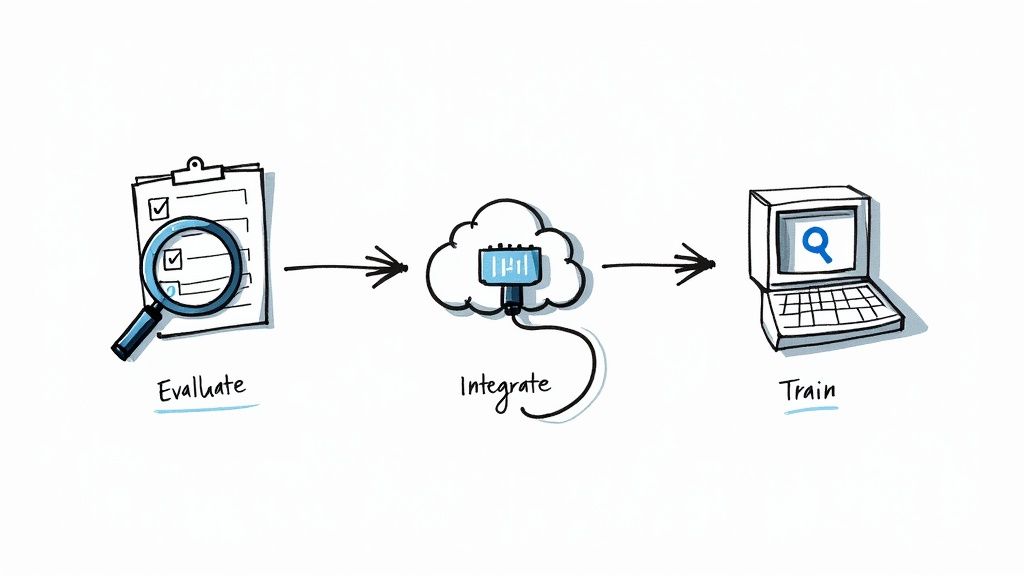
Your Implementation Roadmap
A smooth rollout hinges on clear goals and even clearer communication. Your entire team needs to be on the same page from day one, understanding why this change is happening and how it will make their lives—and your patients' lives—better. Getting ahead of this minimizes friction and sets you up for a seamless transition.
Start by setting concrete goals. Maybe it's reducing patient hold times by 90% or freeing up 10 hours of administrative work each week. Get your team involved early, give them thorough training, and then let your patients know about the new, easier ways they can get in touch. This whole process is taking place in a booming market, by the way. The global medical virtual assistant market hit $5.0 billion in 2023 and is on a steep growth curve, which you can learn more about from these market insights.
The Future of Patient Communication Is Here
Thinking about a virtual medical receptionist isn't about replacing your team; it’s about finally giving them the backup they need. By handing off the high-volume, repetitive tasks like scheduling and reminders, you free up your skilled staff to focus on the complex patient issues that demand a human touch—the very things people do best.
This shift can transform the front desk from a constant source of stress into a smooth, efficient hub. It’s a practical step toward building a more resilient, patient-first practice that’s ready for whatever comes next in healthcare. You can see this change happening across the industry; North America already commands a 39.2% market share, a trend fueled by solid infrastructure and a growing comfort with AI. You can discover more insights about these healthcare market trends to see the bigger picture for yourself.
Looking Ahead
The next wave of innovation points toward even deeper integration. Imagine an AI assistant that seamlessly connects a patient with a telehealth appointment or sends out personalized health reminders based on their medical history. Understanding the broader implications of AI in Healthcare: How Chatbots Can Help Your Team shows just how powerful this kind of support can become.
The real goal here is to create a system where technology handles the logistics, letting your team put all their energy into delivering exceptional care.
By embracing this shift, you’re not just fixing today's communication bottlenecks. You're setting your practice up for the future and redefining what great conversational customer service really means in a modern clinic.
Still Have Questions? Let's Clear a Few Things Up
Bringing any new technology into your practice is a big decision, and it’s smart to kick the tires and ask the tough questions first. Let's tackle some of the most common ones we hear from practice managers thinking about bringing a virtual medical receptionist on board.
Is This Technology Secure and HIPAA Compliant?
This is the big one, and the answer is an emphatic yes. Any virtual receptionist solution worth its salt in the healthcare space is built from the ground up with HIPAA's strict rules as the foundation. It's not an afterthought; it's the whole game.
Every piece of patient data, from a simple name to sensitive medical info, is encrypted both when it's moving and when it's stored. Think of it like a digital armored car with serious access controls. When you're talking to potential providers, don't be shy—ask to see their HIPAA compliance paperwork and get specific about their security measures. This is your non-negotiable step to keeping protected health information (PHI) safe and your practice penalty-free.
Will This Just Replace Our Front Desk Staff?
Not at all. The real goal here is to supercharge your existing team, not replace them. Think of a virtual receptionist as the ultimate assistant—the one who happily takes on all the repetitive, high-volume tasks that grind your staff down. We're talking about the endless loop of appointment scheduling and answering the same five questions a hundred times a day.
By automating all that routine stuff, your human team is suddenly free to focus on what they're truly great at: navigating a tricky billing issue, giving an anxious patient in the lobby their full attention, or handling a sensitive call that needs a real dose of human empathy.
It’s about shifting their work from tedious to meaningful. You'll find they operate more smoothly and, frankly, are a lot happier when the most frustrating parts of their day disappear.
What if Our Patients Aren't Tech-Savvy?
That’s a perfectly valid concern, but these systems are intentionally designed to be incredibly simple. A virtual medical receptionist meets patients where they already are, using the technology they use every single day: a standard phone call or a basic text message.
There are no apps to download, no confusing websites to wrestle with. The system uses natural language processing, which is just a fancy way of saying it understands how people actually talk. Patients can just speak normally, like they would to a person. And if someone ever gets stuck or just prefers to talk to a human? The system can seamlessly hand the call off to one of your staff members in an instant.
Ready to see how an AI assistant can give your practice a serious boost in efficiency and patient happiness? Marlie Ai is a 24/7 solution that answers every call, books appointments around the clock, and lets your staff get back to what matters most: caring for patients. Discover how Marlie works for medical clinics.
